Partnership
Programme
The Institute of Metadynamics invites universities, colleges, educational foundations, learned societies, professional associations and other qualifying organisations to become Institutional Partners of the Institute.
The partnership programme has two complementary purposes.
First, it enables partner organisations to offer their students, staff, alumni or members preferential access to the Institute’s online courses, residential programmes and publications, while sharing financially in bookings they generate.
Second, it creates a framework through which universities and other educational establishments can introduce Metadynamics as an academic subject within their own curricula — from individual lectures and seminars to credit-bearing modules, residential study and collaborative research.
The two strands can operate independently or together.
Route one
Access & participation
Partners can offer Institute courses directly to their own communities, including students, academic and administrative staff, alumni, fellows and professional members.
Courses may be delivered online, residentially at the Institute in France, or through a combination of both.
Each partner can be provided with a dedicated booking code or registration route so that participation and associated revenue share can be identified automatically.
Route two
Academic partnership
Universities may introduce Metadynamics into their own teaching and research, beginning with a lecture or seminar and progressing, where appropriate, to a complete module, residential school or research collaboration.
A larger partnership might combine teaching, residential education, publications, conferences and collaborative research.
The objective is a relationship capable of developing over time.
What is
Metadynamics?
Metadynamics is a developing philosophical system concerned with Action, Value and Existence.
It begins from the observation that organised structures — from living organisms and human lives to organisations, economies and civilisations — exist under conditions of finite energy, constraint, change and time.
It examines relationships between organisation, possibility, entropy, maintenance, adaptation and value, applying those ideas across philosophy, science, psychology, health, economics, wealth, management, politics, ecology and civilisation.
Its breadth makes it particularly suited to interdisciplinary education.
The purpose of academic partnership is not to ask an institution or its students to accept Metadynamics as doctrine.
Metadynamics is offered as a philosophical system to be studied, compared, questioned, criticised and tested.
Universities are not asked
to endorse Metadynamics.
They are invited to examine it.
Who can become a partner?
The programme is intended to accommodate a wide range of organisations. These include universities and colleges, business schools, executive-education providers, educational foundations and institutes, philosophical and scientific societies, professional and chartered associations, alumni organisations, leadership bodies, CPD providers and cultural or educational membership organisations.
Partnerships are adapted to the character, scale and objectives of each organisation rather than imposed through a single fixed model.
Partner economics
A straightforward commercial model
The Institute proposes a simple three-tier structure for qualifying course bookings generated by Institutional Partners.
15%
Standard Institutional Partner
Where the Institute provides the course, administration and delivery and the partner primarily promotes the opportunity to its community.
20%
High-volume partner
May apply where an institution guarantees a cohort, makes block bookings or generates significant annual participation.
Up to 25%
Strategic educational partner
May be negotiated where the partner makes a substantial contribution to recruitment, administration, teaching or programme development.
Alternatively, institutions may purchase places at an agreed net institutional rate and determine their own participant fee.
Residential education
Study in France
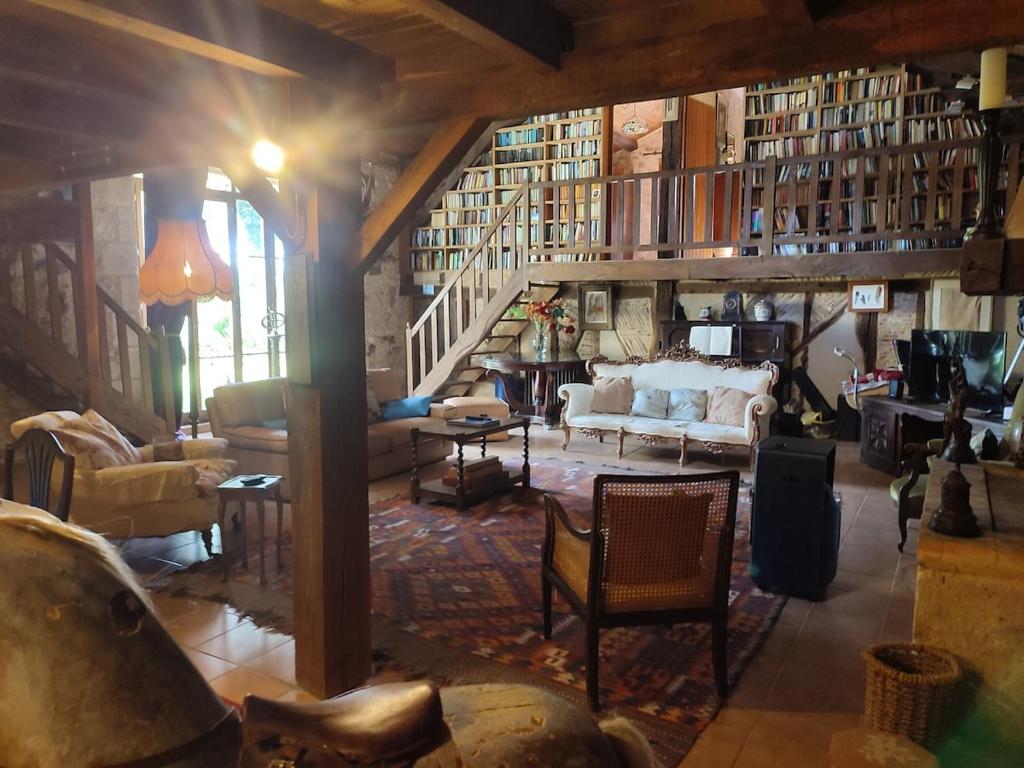
A distinctive part of the Institute’s educational offering is its residential programme at its country estate in France.
The purpose is to combine serious intellectual enquiry with something increasingly difficult to find in ordinary life: time and space to think.
A standard programme runs for six nights, with approximately three hours of structured tuition each day.
The remaining time allows participants to read, reflect, discuss ideas and enjoy the estate and its facilities.
Indicative six-night prices
Shared / twin accommodation
€1,650–€1,850 per person
Standard private room
€1,950–€2,250 per person
Premium / private accommodation
€2,400–€2,750 per person
A useful standard advertised price is approximately €1,995 per person, subject to accommodation category and programme.
This includes six nights’ accommodation, full board, tuition and use of the Institute’s normal residential facilities. Travel is ordinarily the participant’s responsibility.
Example partner economics
At a course price of €1,995, the partner share would be:
15%: €299.25 per participant
20%: €399 per participant
25%: €498.75 per participant
A partner referring ten participants at the standard 15% rate would therefore receive €2,992.50.
For larger cohorts, the Institute may instead agree a fixed institutional price, typically around €1,650–€1,700 per participant depending upon accommodation, programme requirements, season and numbers.
Tailored education
Bespoke residential programmes
Institutional Partners need not choose only from the Institute’s standard courses. Programmes can be developed around the interests of a particular university, faculty, foundation or professional organisation.
Possible themes include:
Metadynamics and the Philosophy of Science
Organisation, Complexity and Structural Entropy
Action, Value and the Good Life
Metadynamics of Leadership and Organisations
Human Flourishing under Constraint
Wealth, Value and Economic Organisation
Politics, Institutions and Civilisational Resilience
Ecology and the Future of Organised Life
Consciousness, Mind and the Self
Academic development
Metadynamics within
the university curriculum
The Institute proposes a progressive model allowing universities to explore Metadynamics academically before committing significant teaching or institutional resources.
Stage one
Guest lectures
An introductory lecture provides the simplest academic entry point.
Possible subjects include Metadynamics: A Philosophy of Action, Value and Existence, Organisation, Entropy and the Nature of Value, Possibility, Structure and Time and Science and the Architecture of Reality.
Indicative fee:
€500–€1,500 plus reasonable travel and accommodation where required.
Stage two
Seminars & short courses
Universities can progress to seminars examining particular elements of Metadynamics in greater depth and deliberately exposing the philosophy to comparison and criticism.
It may be considered alongside Aristotle, Spinoza, Kant, Popper, Kuhn, Whitehead, scientific realism, pragmatism, emergentism, systems theory and complexity theory.
Indicative fee:
Half/full day: €1,000–€3,000
4–6 sessions: €3,000–€6,000
Stage three
Credit-bearing module
A university may choose to develop a complete undergraduate or postgraduate module.
A possible title is Metadynamics: Organisation, Possibility, Entropy and Value.
A 10–12 week module could address ontology, epistemology, emergence, causation, value theory, philosophy of science, complexity, human agency and structural entropy.
Academic independence
Assessment remains entirely within the academic standards of the university and may include essays, critical comparisons, seminars, presentations or dissertations.
The university retains complete control over accreditation, academic standards, admissions, assessment and the awarding of academic credit.
The Institute does not propose charging universities a royalty simply for discussing or teaching the published philosophy of Metadynamics.
Normal copyright continues to apply to Institute and author publications, course materials, videos, diagrams and other proprietary content.
Indicative institutional fees
Guest lecture
€500–€1,500
Full-day workshop
€1,500–€3,000
4–6 session short course
€3,000–€6,000
Development of complete university module
€7,500–€15,000
Institute delivery of complete module
€10,000–€20,000 per delivery
Executive/professional programme
Negotiated
Continuing curriculum consultancy
Negotiated annual agreement
Figures are indicative rather than mandatory and may be adjusted for institution size, geography, teaching requirements and the strategic significance of the collaboration.
University residential schools
The academic and residential strands can also be combined. A university may incorporate a week at the Institute into an undergraduate, postgraduate, alumni or executive-education programme.
Referral model: participants book directly with the Institute and the university receives the agreed partner share.
Block-booking model: the university purchases an agreed number of places at a discounted institutional rate.
Academic field-school model: the university charges its own academic tuition fees while separately contracting the Institute for accommodation, full board, facilities and agreed specialist teaching.
Co-branded programme: the Institute and university jointly develop and promote a programme and agree revenues and costs in advance.
Online education
Partners can offer existing Institute online courses through dedicated registration links or booking codes.
The same 15% / 20% / up to 25% partner structure can apply to eligible online-course revenue.
Universities may also negotiate licences for substantial use of proprietary Institute teaching materials within their own courses.
Books & teaching texts
Partners may purchase Metadynamics titles in quantity for teaching, libraries, conferences, member benefits, retreats or resale.
10–24 copies: 15% discount
25–49: 20%
50–99: 25%
100–249: 30%
250+: 35% or negotiated
Shipping is ordinarily charged separately.
Sponsored places
Foundations and philanthropic organisations may fund residential places for students, researchers, teachers, writers, young professionals or others who would otherwise be unable to attend.
These may take the form of named Metadynamics Scholarships or Institute of Metadynamics Residential Fellowships.
Research, criticism
and development
The Institute’s longer-term ambition extends beyond teaching.
Metadynamics makes propositions about organisation, possibility, value, structural entropy, adaptation and the development of complex systems which can be compared with existing philosophical and scientific thought.
Possible activities include collaborative seminars, academic conferences, visiting fellowships, postgraduate dissertations, doctoral research, publications and interdisciplinary projects.
An eventual Annual Metadynamics Symposium on Organisation, Value and Existence could bring together philosophers, scientists, economists, psychologists, systems researchers and scholars from other disciplines.
The purpose would not be to create a community committed to defending Metadynamics, but one capable of testing, challenging and developing it.
A partnership that can grow
Begin simply. Develop where it makes sense.
Partner membership → online courses → guest lecture → seminar series → residential programme → curriculum module → accredited study → research collaboration.
There is no requirement to progress through every stage.
A professional body may remain primarily a course and residential partner. A university may concentrate on teaching and research. A foundation may focus upon scholarships. A business school may combine executive education with residential programmes.
The Institute provides the intellectual framework and educational resources while allowing each organisation to determine the relationship appropriate to its own community.
Principles of partnership
Academic independence.
Universities retain responsibility for their own academic judgement, teaching standards and accreditation.
Intellectual openness.
Metadynamics is offered for examination rather than acceptance.
Commercial transparency.
Commissions, discounts, institutional prices and responsibilities are agreed in advance.
Mutual benefit.
Partnerships should create demonstrable value for the Institute, the partner organisation and, above all, participants.
Quality over volume.
Residential programmes should remain sufficiently small to preserve discussion, intellectual engagement and the character of the experience.
Long-term relationships.
The objective is not simply to generate individual course bookings, but to establish communities in which Metadynamic ideas can be encountered, questioned and developed.
An invitation
to partnership
The Institute is seeking relationships with institutions that believe serious ideas still matter — and that education should do more than transmit information.
What makes a life valuable? How should we act in a world of finite resources and limited time? Why do organised systems flourish, become fragile and decline? How do we distinguish genuine possibility from fantasy? What deserves our attention, energy and effort?
The Institute offers several ways to explore those questions: through books, online education, residential study, university teaching and collaborative research.
The commercial model is straightforward. The intellectual ambition is considerably larger.